

machine learning
Calculus, Machine Learning, Math
Understanding the Directional Derivative and the Gradient
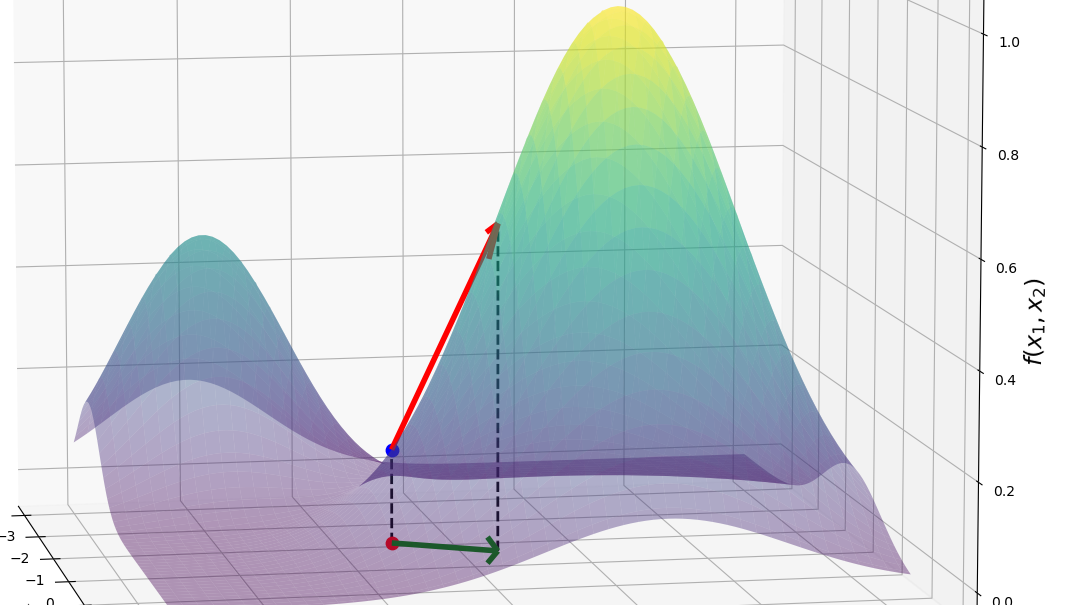
1 Introduction Understanding how functions change in different directions is crucial in many fields. For example in the context of neural networks where gradients are used to update weights during the training process. In this article, we will explore the concepts of the directional derivative and the gradient, and we will demonstrate their relationship through

Math, Probability and Statistics
Maximum Likelihood Estimation
The method of maximum likelihood estimation allows to estimate point parameters for a given distribution underlying some observed data. Let’s look at an example to understand what this means:Imagine you measure the height of 20 women within an age-range between 20-40 years. You denote the measurements as \(X_1=x_1, X_2=x_2,…,X_{20}=x_{20}\), where the capital \(X_i\) refers to

Probability and Statistics
How to create a random variable with a Beta distribution from scratch, using only Uniform random variables
You can use software, like scipy.stats.beta if you want to sample from a Beta distribution. But you can also create a Beta distribution yourself — from scratch. The only thing you need is access to a Uniform random variable. This post shows an implementation of example 12.1.4 on p. 539 of the book “Introduction to
Probability and Statistics
Understanding the Probability Density Function of the Normal Distribution
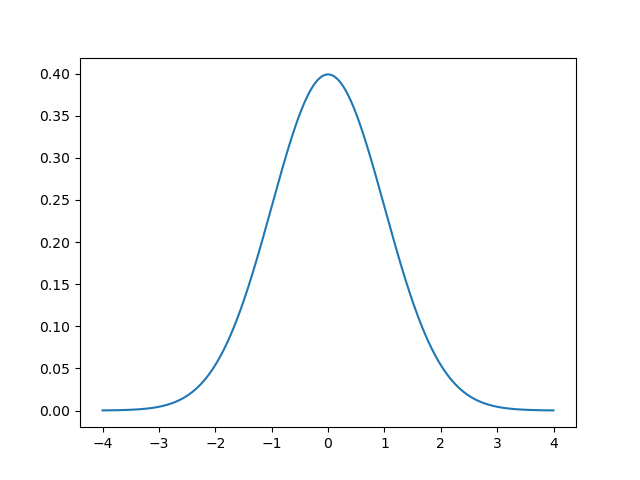
A random variable \(Z\) is said to have the standard normal distribution, if its probability density function (pdf) is as follows: \[\begin{equation}f_Z(z)=\frac{1}{\sqrt{2\pi}} * \exp(\frac{-z^2}{2}), \quad -\infty<z<\infty\end{equation} \tag{1}\label{eq:eq1} \] This formula seems hard to digest and remember. The goal of this post is to get familiar with it. We will do so by dissecting it thoroughly