
Which envelope should you choose?
A detailed solution for a problem about total probability

A detailed solution for a problem about total probability
This article aims to distinguish between Variance, Covariance, Correlation, Autocovariance, and Autocorrelation. Furthermore there will be a numerical discrete example for computing the Autocorrelation in python. This article will not derive the formulae mathematically, only state them. Variance measures the spread of a r.v. (random variable). \[\begin{equation} Var(X) = E[( X-\bar{x} )^2] = \sum_{i=1}^{n} {
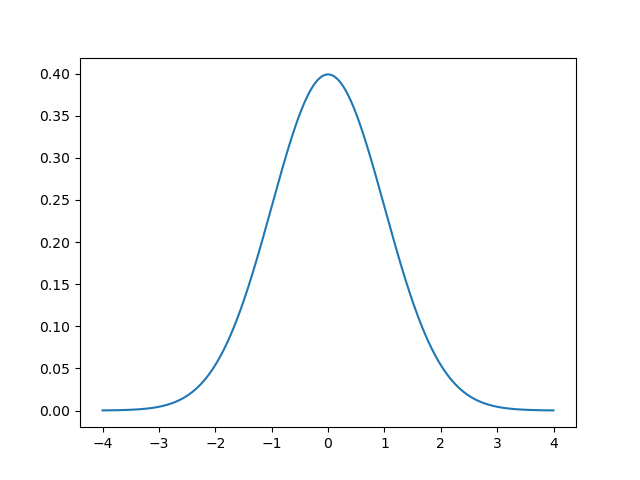
A random variable \(Z\) is said to have the standard normal distribution, if its probability density function (pdf) is as follows: \[\begin{equation}f_Z(z)=\frac{1}{\sqrt{2\pi}} * \exp(\frac{-z^2}{2}), \quad -\infty<z<\infty\end{equation} \tag{1}\label{eq:eq1} \] This formula seems hard to digest and remember. The goal of this post is to get familiar with it. We will do so by dissecting it thoroughly
https://brilliant.org/wiki/integer-equations-star-and-bars/ https://brilliant.org/wiki/identical-objects-into-distinct-bins/ So, the total number of objects consists of the number of balls or start or else plus the number of bins -1 (which is the number of bars needed). Note, that it does not matter if we find all the ways we can choose the number of bars from the total number of
AllGirlsIfAtLeastOneGirl In [6]: from scipy.stats import binom, uniform import numpy as np #sample from a binomial distribution #Model: Urn with balls of 2 colors. Draw a ball n times with replacement and note down #number of successes. n=1 p=1/2 #we want to model 10000 families. Each family has 2 children. Each time the child #might be
https://gist.github.com/irene-markelic/c57d616a1dab051b4d57e70d36fb920b#file-binomialdistributionexample-ipynb BinomialDistributionExample In [1]: from scipy.stats import binom import matplotlib.pyplot as plt # experiment: 10 balls, 7 are white and 3 black # we pick a ball 10 times with replacement # What is the probability that there are: # – 0 white balls # – 1 white ball # – 2 white balls # –